Curiosity ~ Lucidity ~ Humanity

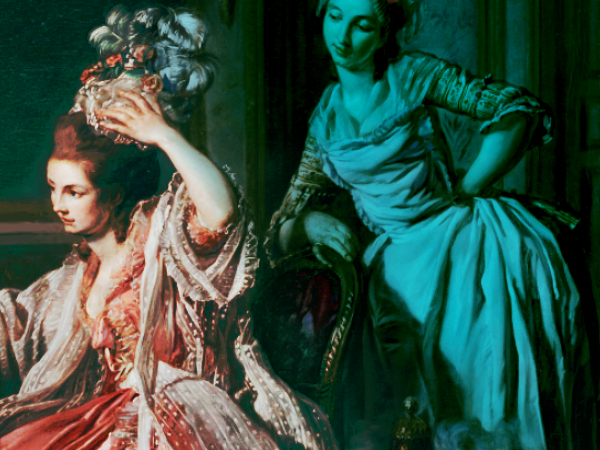
Nettie Brown stood at the top of the worn but freshly scrubbed stone steps, composing herself with a restless thumb on the latch of her front door. Nettie, a shapely girl at twenty-three, tucked a loose strand of dark hair under her bonnet while smoothing the letter in her hand.
“Dreamin’ again, are you, Nettie? On with you—the door won’t open itself.” Nettie jumped in surprise, which quickly faded through the sound of her father’s voice. Nettie, grinning, turned to face him.
John Brown stood before her, carrying his heavy masonry tools in his long, oil-polished toolbox. “I see you’ve a letter.”
“I’m ready now, Da. The recommendation’s come.”
John's eyes crinkled with his smile, his presence a comfort for the young maid.
“Go on then lass--while we’re young.”
Nettie pressed the thumb latch and entered the family home with John, who closed the door securely behind her. She heard the hobnails in his boots clicking against the brick floor, then she saw her mother, Alice Brown, a strict maid-of-all-work who dreamt of better prospects for her daughter. Nettie was destined for the manor, Alice insisted, she’s not for the city.
Nettie listened well when Alice told her that work in a manor was not easy to find for a young woman, and the chance of a good life wouldn’t come twice.
The scent of porridge filled the room, making the dim, coarsely plastered interior feel snug. The candles resting on the table glimmered, shining on the three pewter spoons set as place settings. Nettie realized in sadness that soon enough only two spoons would remain at the table.
“All right, girl, have you the letter from the Grosvenors?” Alice turned from the stone hearth while Nettie opened the letter of recommendation.
“Yes. Would you help me practice me words for Lady Fairleigh?”
Alice Brown wore a white chemise, held close and protected by a calico apron that matched the bonnet over her graying hair. She stood before Nettie, asking in the affected voice of a lady, “I see you’ve provided a letter of recommendation from Abigail Grosvenor, and that she thinks highly of your abilities and character. Do oblige me and describe your experience as her housemaid.”
“Yes, ma’am. In me five years with the Grosvenors, I did the scrubbing: Floors, tables, windows, all of it. In the afternoon, I’d see to it that all quarters were clean, then I’d I set the kitchen neat again afore supper. After supper, I scrubbed the pans and polished the copper till it shone proper. I kept the Grosvenors home in top order, and I aim to do more than what’s expected of me in the Fairleigh home.” Nettie checked for approval on her mother’s face, seeing expectation instead.
Alice responded, hands planted squarely on her hips, “Stand straight and don’t fidget wi’ your apron. You work hard so present yourself plainly, no fussin’ and flusterin’. Say what you do an’ keep your hands steady.”
“Look at you now, makin’ an old man proud you are,” said John, his smile spreading, but not as widely as it had before. Nettie saw that his face held both love and pain, a new expression that left her heart heavy. Candlelight revealed the lines on his work-worn face, and she thought leaving home was aging him a decade. “Aye, you’ll be in the big house, our Nettie, I’m sure of it.” Alice relaxed her posture and nodded her head, her moist eyes lingered, holding contact with her Nettie. She cleared the lump from her throat and changed the subject. “Well now, we’ll wither to nowt without our supper.”
Following her interview with Lady Eleanor Fairleigh, Nettie began her work in the large country estate, learning her chores from the other maids. Though her position as a kitchen maid was lower than her work as a housemaid for the Grosvenors, the pay was higher and Nettie knew there were opportunities for her future at Fairleigh Manor. A month had passed, and she was beginning to feel as though she had settled into her new routine, with fewer questions to ask.
Above stairs, Nettie saw that Lady Eleanor Fairleigh’s parlor was cool and bright in the late morning sun. Lady Eleanor ordered the windows thrown open in her preference for the scent of the lilies and roses in the gardens below over the odor of the horsehair upholstery that bound her settee in crimson.
Nettie accompanied Mary Fletcher, a chambermaid to the Fairleigh family, to whom she had grown close, their friendship thriving through shared laughter and gossip. Mary had an impish, nearly impetuous look with her dark brows and ginger hair. Her appearance matched her easy humor which had yet to be scrubbed thin.
Quiet as a secret, Nettie dusted the corner shelves, taking care to gently return the items to their rightful place. Mary knelt her petite frame on the rug, polishing an imposing pair of grand brass vases so large that they rested on the floor. The two companions readied the room for the arrival of Lady Eleanor’s guests when the lady strode into the room, her slippers landing on the floor in firm, hurried steps. Nettie faced Lady Eleanor, offering her full attention as her mother taught. In her fine cotton housecoat that draped to her ankles in clean lavender lines, Lady Eleanor held a bouquet in her closed fist.
“Mary,” she said, though it was not quite Mary she addressed, it was the atmosphere itself. “There is mud on the stair landing again.” Lady Eleanor bore her brown eyes into Mary’s and held her refined jaw in tensed closure.
Mary rose immediately to her feet, smoothing her apron against her thighs, “I swept it just after breakfast, ma’am. I’ll see to it again.”
Lady Eleanor looked to Nettie as though she were holding a storm on the open sea. Nettie’s eyes were wide now, and she watched Lady Eleanor closely. She saw Lady Eleanor’s arms held tightly against her sides, crinkling the flowers in her hand before speaking.
“Are you suggesting that I am mistaken?” she asked Mary.
“I would do nothing of the sort, ma’am.” Mary shook her head. “Only it must have been tracked after I–”
Lady Eleanor closed in, causing Mary to take a step back. “You do not argue with me,” Lady Eleanor said, “I’ll not repeat myself.”
Mary’s eyes widened, her hands open in front of her. “No, I’ll see it never happens again, ma’am.”
Lady Fairleigh’s lips drew into a snarl, and in a swift movement, daunting in its control, cuffed Mary across her drained white cheek. Petals scattered from the impact, wilted and drifting to the Persian rug.
Mary’s breath hitched, and stillness dominated the poshly decorated room. She turned to Nettie in her shock, unable to speak, unable to move. Nettie looked on, paralyzed, her eyes wide and unmoving and her feet on the floor, leaden.
Lady Eleanor stood very still afterward, her muscles released of their taut intensity, and she settled into composure. “Clean the mud.” Eleanor dropped her eyes and clarified “Now.”
Mary looked at her hands and nodded in confusion, her feet silent in her softened steps out of the room.
Eleanor turned toward Nettie. “I don’t want you out of the kitchen. I don’t want to see you.”
“Yes, ma’am.” Nettie clutched her rough linen dustcloth against her chest like a talisman. Her eyes burned from inside their sockets, but she fought her urge to cry in front of Lady Eleanor. She moved quickly, exiting the parlor, while gravity wrapped its stony hand around her heart.
It was Monday, cleaning day in the kitchen, and the cook, Mrs. Smythe, found Nettie. Mrs. Smythe told her, “I’ll need you to fetch some blacking.”
The great iron range was re-blacked every other week, and Mrs. Smythe would often dismiss kitchen maids early on the blackening days if their work was done before the process began. Nettie loved those quiet days spent freshening the range alone. The kitchen, a large, utilitarian room below stairs in the service wing was a warmly bright room, inviting in its informality. The plastered walls, though maintained with weekly cleanings had aged into a buttery cream from the heat of the woodfires deep inside the range. The kitchen’s plaster walls reminded Nettie of her home, the room now a refuge. The copper pots along the walls and shelves glinted and gleamed in the light beaming through the West windows, and the glow of candles and lanterns lit the tables. Nettie often imagined pewter spoons set out for meals, though the tables remained empty.
Mrs. Smythe broke Nettie’s daydream. She used her stocky, strong arms to move a bubbling soup pot from the range and onto a gingham towel on the work table before charging Nettie with a task.
“Have Mr. Barlowe in the city charge three tins to the manor account, dear. The range should be cool enough to begin by the time you return.”
Nettie, delighted by the opportunity to return to her childhood neighborhood, nodded, “Aye, ma’am. I’ll not be long.”
Nettie was dressed in her work dress and warm in a russet shawl around her shoulders. The young kitchen maid straightened the cloth around her dark hair, and a broad smile parted her lips. With a light step, she tucked a cotton cloth into her market basket and took to the footpath into the city. The morning sun warmed the air, and the music of birdsong eased Nettie’s walk into a joyous undertaking. On her own now, and without supervision, she had a rare opportunity to reconnect with her family on her way to Barlowe’s chandlery. This was not an opportunity she was going to allow to pass unheeded.
The city, with its uneven cobblestone streets and tightly connected dwellings, held the familiar odor of coal smoke. Nettie only now noticed the grime that was once so familiar as to be invisible. She no longer heard the melodies of birds, but instead the shouts and giggles of playing children--another piece of home forgotten.
Her childhood home was quiet. Nettie stepped inside to find her mother scrubbing and peeling turnips for stew. When Alice Brown’s eyes met Nettie’s her expression changed from purposeful to one of loving surprise, pulling Nettie closer. Setting her work aside, Alice Brown approached Nettie and took her into her arms, pulling her close. Alice’s sharp but weary brown eyes moistened with tears.
“My girl, my Nettie, only a month’s time is too long. I thought my heart was done wi’ the sunlight altogether.” Alice cradled Nettie’s face in her hands and kissed her forehead under her bonnet.
“Mum. I can breathe again. I’ve missed you so.” Nettie relaxed into her mother’s arms, resting her head against Alice’s warm, familiar shoulder. Nettie’s joy was now pierced with a twinge of pain in the safety of the home that allowed it. The need for care with her words gone, a sob rose from Nettie’s chest, reddening her face before releasing itself from her eyes in tears. Alice held Nettie closer, holding her head until her daughter could speak once again.
“There now, aye. Let it come. What’s troubled you, love?” Alice’s warmth warmed Nettie’s body, releasing her tension while Alice used her apron to dry her daughter’s tears.
Nettie took a step back, “I’m nowt but a shadow, Mum,” her voice fragile and thin. “I keep meself small, me steps quiet, me voice like that of a whisper. She told me, Lady Eleanor did,” pausing to steady her breath, “that she doesn’t want to see me, ever.” Holding her hands to her face, bracing herself against another sob, she went on. “If it weren’t for me work, she’d sooner I wasn’t there at all.”
Alice paused, caressing the young woman’s face. “Nettie, hear me now, what d’you reckon all them gowns are worth? The pearls? The grand do’s and candlelight? Does all that keep them warm at night? Does finery fill a lonely heart?”
Nettie drew her fingers across her eyes, drying them before the moisture condensed again into tears.
Alice continued, more quietly now, more steady, “We have what they cannot buy.” The scents of home filled the space between words; porridge, candlewax, burning wood, and Nettie remembered. She remembered her home and her old life under her parents’ care, exhaling her troubles in a long, laden breath.
Alice spoke again, simply and earnestly, “We mind one another.”
Nettie rested her head against her mother’s chest again, and with steadiness in her voice, told her mother, “I forgot meself for a while.”
Nettie stacked china plates with care in the kitchen, where Mary and Mrs. Smythe leaned in together in close attention.
“She’s not herself. Her voice shakes when she tries to sound fine.” Mary whispered.
With the last of the plates put away, Nettie moved closer to the pair, asking “Do you mean Lady Eleanor?”
“We do,” Mary answered.
“She hasn’t always been like this?” Nettie asked, her voice low.
Mary said, “Aye, she has, but it weren’t her only way—she had her moments of kindness too.”
“Her kindness left when Lord Fairleigh returned from his Indian expedition.” Mrs. Smythe inhaled sharply and straightened her posture. “Anyway, duty calls, lass.” Mrs. Smythe handed Nettie a basket. “Fetch more apples for the press, dear, one basket should be enough.”
“Oh,” Nettie replied, noting the change of subject. “Aye Ma’am, won’t be a minute.”
She crossed the flagstones to the kitchen door, using the weight of her body to swing it outward, then stepped through onto the footpath. The door, an oaken stronghold against the elements, closed behind her, cutting off her friends’ voices. It was freshly cool outside, but not enough for Nettie to forget what was said. What happened, she thought, when Lord Fairleigh was away?
The autumn air smelled of hearth smoke and stables. Fallen leaves crunched under Nettie’s shoes: announcements of her passage from the kitchen to the grove. Ahead of her, the shadows grew long under the late year’s sun, striping the land with light and shadow, leaving darker gradations obscured. The orchard held its fruit within, ready for the picking, and Nettie became lost in the orderly rows. Such was her curiosity about Lady Eleanor that she felt time passed without her. She barely remembered picking the apples at all; only the weight of the basket signaled her chore’s end.
Nettie was on her walk back to the kitchen when Thomas Henshaw’s wagon caught her attention. Surely it wouldn’t hurt to stop at the stables on her way back, Nettie thought. Thomas Henshaw made for cheerful company.
Once inside, Nettie didn’t find the good-tempered Thomas, instead she took her time with the four horses. She spoke softly to them, feeding them an apple each. “Thomas, I hardly need instructions, do I?”
It was Lady Fairleigh. Curious, Nettie stepped lightly, following the sound of the voices to the tack room. She set her basked down and peered inside through a wide crack in the wall. The tack room was filled with the warm gold of lamplight, creating a cozy hideaway. In the center of the room sat a saddle stand, complete with its saddle. On the saddle was a rider: Lady Eleanor. She sat astride the saddle with her house dress pulled up to her knees, and her gaze fell directly into Thomas’s large green eyes, holding longer than propriety should allow. The handsome farrier stepped closer, caressing the lady’s cheek with his rough fingers. Lady Eleanor leaned forward, tilting her head up in anticipation.
Thomas Henshaw watched Lady Eleanor’s lips as she spoke, causing a half smile to curl across his face. He bent to meet Lady Eleanor’s upturned face, with his hand under her chin, directing her into his lingering kiss. Lady Eleanor indulged herself with a passionate embrace, pulling Thomas’s body even closer until her hands found purchase on his muscular back. Breathing him in and luxuriating in his scent, Lady Eleanor seemed to Nettie to be in an uncharacteristic state of gratification; she saw none of the anger and frustration she had grown to accept as normal.
In light of her discovery Nettie took a step backward, nearly tipping the apples over, then held a hand over her mouth, silencing herself. The riddle of Lady Eleanor’s behavior may be no longer, she surmised. Could it be that Lord Fairleigh’s return pulled Lady Eleanor away from Thomas Henshaw? A secret like that could ruin a marriage.
Nettie was excited to get back to the kitchen with her news, not realizing that the pair were soon to open the door to the tack room. When she heard the latch, she turned to face the stalls, making an effort to look busy, as if searching for a lost item.
The lovers stepped out together, and Nettie leaned over the edge of a stall as though she had dropped something important, then rose and let her eyes wander the stables behind her, spotting the apple basket. Pantomiming acknowledgment of her find, she walked toward the basket, feigning surprise when she saw Lady Eleanor with her lover. Nettie and Lady Eleanor held eye contact until Nettie lowered her eyes, slowly, and with acknowledgment, her eyebrows remaining high on her forehead. Fearing Lady Eleanor’s wrath she kept eyes on the ground without speaking. The truth had a voice loud enough.
Lady Fairleigh straightened, composing herself in quiet self-defense, and left the stables. Thomas did not follow her but looked toward Nettie instead, nonplussed and appearing confident of her favor.
“Riding lessons, I s’pose?” she asked.
“Only for the few. Care for a turn in the saddle?”
Nettie, speechless, turned away, leaving the stables just as Lady Eleanor had the moment before. The walk back to the kitchen seemed to hold no signs of the natural world, instead gray and silent. Nettie’s thoughts turned inward instead. She knew the importance of what she saw, and she suspected that the other maids might know about it. Unlike the woman she knew, the Lady Eleanor she saw through the crack was at ease and appeared untroubled. Her cheeks held more color, and her movements were graceful rather than forceful. It seemed that Lady Eleanor had found her happiness outside the manor, leaving her servants inside to carry her burden. That’s not our load to carry, Nettie thought.
When she arrived at the kitchen door she entered the room with her basket of apples. She set the apples in the pantry, and resumed her work. The Fairleighs’ dinner party was only a day away.
In the corner, Nettie watched the party, wearing a borrowed housemaid’s apron and red dress. She held a silver pitcher filled with cool, fresh water suitable for filling water goblets as the guests dined, and she waited for Lady Eleanor to notice her above stairs against expectations.
Candlelight flashed and sparkled off the high French polish of the walnut dining table. Lord Fairleigh carved roasted goose with his usual air of practiced confidence, taking his time to present each slice as he laid it upon the deep china serving platter, in time with his elocution.
“Even after the Poor Laws Amendment it seems the matter of the eastern wood is unsettled again. My steward reports that families of a certain background have been cutting kindling along the boundary path. Entire bundles at once, and carried away without permission.” Lord Fairleigh watched his guests closely as he spoke, looking for signs of interest. Seeing that his guests were waiting for more he spoke again.
“Since the newest Poor Law some of these families are taking what they can. The workhouse offers no relief, and the churches now refuse the aid it once dispersed. I don’t know how parliament expects us to keep order when its laws are pushing the lower classes into our land.”
Lady Langford hesitated, then spoke. “It’s difficult to ignore that desperation does have its role in this, but that’s not our doing. I know the changes are meant to support independence among these classes, but, as it so often seems the case, necessity is a law of its own. We must be watchful at the gates, for these are perilous times.”
Patting his wife’s hand, Sir Alistair Langford saw his opportunity. He ran his hand through his hair while he spoke, keeping it from losing its shape. “Well, and I do not say this merely to hear myself speak, though I have observed over many years of travel, through city and countryside, where the heaths roll on and suggest both the importance and insignificance of one’s existence, breathtaking, really. Of course, parliament has now forced many a hand, and I cannot deny it. But whenever there is a stretch of land that appears wooded enough to supply fuel indefinitely, the poorer villagers do seem to adopt the belief, almost by instinct rather than reason, that there is timber enough to fuel their fires, regardless of longstanding deeds, and agreements which form the very basis of civilized society. I must say that I do support the fight against the idleness among the lower classes: a dreadful thing indeed, but law simply does not take human nature into account which I do believe is a matter of upbringing. Many among these classes ignore everyone’s rights in favor of their immediate whimsy.” Following his contribution, Sir Alistair searched the faces of his companions, and allowed his breath to escape when Lady Fairleigh concurred.
Holding her wine glass by its stem and examining it for cleanliness, Lady Eleanor added, “It is burdensome that we must re-establish our very birthrights when these rogues, nearly savages in truth, prefer to behave as though our land was common property.” Eleanor Fairleigh’s eyes widened almost imperceptibly when she spotted Nettie so near the dinner table. A momentary frown darkened her brow, but she quickly returned to the thoughtful and detached expression she had cultivated in finishing school, returning her gaze to her dinner guests.
Savages are we? Outrage burning within her, Nettie straightened her posture, holding her chin higher in recognition of what she’d heard. She knew what Eleanor Fairleigh was loath to have known. She knew her secret, and a most impious one, a secret not fitting the loosest of upper class standards. Nettie remembered the cold of winters past in the city, and how the cracking of fires drew her family close to the hearth. She walked in quiet before filling Lady Langford’s goblet. Nettie fought the urge to speak for herself, instead pouring with careful and knowing precision, a performance for Lady Eleanor’s notice.
Eleanor Fairleigh continued, “It is a stain upon society that such lawlessness is allowed to continue. I can only take comfort in the knowledge that my dear mother is no longer alive to see these upstarts encroach upon private property. It appears that the servant classes may have forgotten their role.” She followed her comment with an uncomfortably long glance at Nettie, deliberate in her attempt to hold the young maid’s attention. Nettie resisted an outburst in defense, instead holding her silence. This was not the time nor was it the place.
Oblivious to the subtle exchanges between Eleanor and Nettie, Colonel Arthur Ames leaned back in his chair, making more room for himself with his elbows out and his laced hands holding his reclining head. Colonel Ames then made a show of clearing his throat, his cough shaking his blond mustache. Once all eyes were on him he spoke.
“Oho! It is universally the case, Langford, and I’ve seen even more of it. I have found, that without any breeding or training, such individuals are ignorant to the polite habit of controlling their impulses. It is not only England’s parliament that produces such lawlessness among the commoners; I’ve seen it firsthand among the Spaniards. On my campaign through the battle of Telavera, where the men, deprived of the structure that a good Lord imparts upon his villagers, fell immediately into presumptuous notions of private property being public property. They may think nothing of a branch here, or a log there. Maybe they take a bit of fencing to repair their homes, maybe they hunt rabbit on private land to serve as their family’s supper. If they could only see that if they continue to appropriate others’ property, no matter how small, they will soon live within the chaos they have sown.”
Lady Eleanor gripped her wine stem tightly, her face tensed in the appearance of composure, and offered, “Yes. One tires of ill-bred opportunists.” Nettie, understanding herself as the target of the comment, allowed her lips to form the subtlest of smiles at the thinness in Lady Fairleigh’s voice.
“Oh, the horrors of war.” Lady Langford spoke, “It’s no surprise that the villiagers would want to secure their survival. In England, though, I should hope that something’s done about these intrusions upon our estates. Those sound absolutely terrifying.” The lady’s ringed hand was pressed against her chest. “It is true that this is simply a dreadful state of affairs for all involved.”
Straightening the cuffs of his starched white sleeves, Lord Fairleigh offered his courtly reply to his troubled guest, “It is dreadful for all of us. But, there is no cause for alarm, I have the magistrate’s ear. This is a simple matter; property must be respected, and those who fail to respect others’ property must be corrected. I will speak with him at his earliest convenience.”
Shaping his hair again and striking a practiced pose, Sir Alistair continued, “Oh, quite, Fairleigh, quite. I must say that it has often been my observation during the years I visited the Salisbury Plains estates, that the shepherding families had traditions of their own that we would not recognize, that were beautiful in their rustic simplicity. But even so it was evident that it was the unwavering firmness of the holders of the estates, rather than any punishments of severity that led to the peacefulness of good conduct within his given estate. It can promote good conduct, and the resulting peace, if a gentleman conducts himself with resolve, that the lower orders simply fall into their place in the natural order of life.”
Lady Fairleigh interjected, “Some matters require resolve, yes?” Her eyes drifted from her wine glass and out the window, toward the stables.
Lord Fairleigh concluded the discussion on the topic, “Well. It will be settled. Our household must remain in order.” He brushed the crumbs from his shirt and slowly sipped his whiskey.
Nettie set her eyes upon Lady Eleanor, squaring her shoulders until Lady Eleanor looked away, strengthening Nettie’s resolve. Indignity was not hers alone.
*** The maids washed the dishes from the dinner party amidst a lively discussion of the evening’s events.
Mrs. Smythe acknowledged, “Well. That were a dinner and no mistake,” and snorted with laughter, drying a goblet. “Lord Fairleigh goin’ on about some dead twigs on his side of the fence as if the world might crack in half if a family has warmth enough to keep their kin from freezin.”
Mary responded while soaping a wineglass. “They called them thieves,” she said incredulously. “Like they’ve no right to survive.”
Mrs. Smythe set the goblet on its shelf and responded. “Aye. Easy enough to believe your own comfort is the natural order, but the struggles of survival are simply borne of poor character. But as I think about it, it’s not the firewood that’s the trouble. It’s her ladyship.”
Nettie listened intently, drying a plate.
“You noticed,” Mary said, her voice lowered in confidentiality.
“I’ve seen it as well.” Nettie spoke without looking up from her work. Her comment drawing the eyes of the other two women.
Mrs. Smythe reasoned, “She’s wantin’ somethin’ she can’t have, and she’s trying to live through it like nowt’s amiss,” her voice low and quiet.
“Let’s just say it, it’s Thomas, isn’t it? The way she brightens when she sees ‘im,” Mary said as she glanced at both Nettie and Mrs. Smythe.
Nettie listened intently, taking it all in.
“She’s not exactly wicked, just hungry.” Mrs. Smythe surmised. “And Thomas?”
Nettie drew in a long breath, saying, “The man makes his sport where he can, doesn’t he? Thomas belongs to none but himself.”
Mrs. Smythe held a smile in her wisdom. “He might not mean harm, but harm follows him all the same.”
Nettie lifted her eyes, knowing what Mrs. Smythe meant.
Behind them, the kettle whistled on the stove.
*** Carrying Lady Eleanor’s breakfast on its tray, Nettie ascended the kitchen stairs, trying to control the trembling in her hands. This could cost us all, she thought. There’ll be no work for us in the manors; we’ll have to make our way in the city, the workhouse rising large behind our backs.
The wooden steps remained solid under her feet, steadying her legs from waver, but the stairs felt steeper now, her climb more laborious. She felt every step weaken her legs, challenging her ascent until she reached the last stair at the top. Maybe I shouldn’t do this, she thought. Nettie caught her face in the hallway mirror, and saw her mother’s strong features and direct gaze.
Dishes rattled on the tray, and Nettie gripped it more firmly, nearly startled by the clinking echoing in the hallway. Sound was amplified here, a reminder of the power of the truth, and of the cost of her silence. This could be any other day, or one of the days to come, complicit in the lady’s lies, and carrying a weight that wasn’t hers to carry. Everyone below stairs would continue to live under the fear of Lady Fairleigh’s cruelty.
Standing outside the lady’s chamber, holding the tray steady, she remembered her father’s boots, worn at the soles and patched. She saw her mother at the porridge pot, stirring and perfecting it to warm her family from the cold. She saw her wages sent home to her family, and she saw the fire, kept low in winter to preserve wood.
She almost didn’t open the door. This is it, she thought. Drawing a slow breath and holding the tray against her body, a servant ready to serve, but this time a servant with the power of a word. Holding the tray against her left hip Nettie opened the door to Lady Eleanor’s chamber, noting the cross look of anger on her face. Nettie moved further into Lady Eleanor’s room and set the tray of tea and white toast on Eleanor’s bedside table.
Lady Eleanor sat up in her bed, lips pressed together, and reached with a measured and deliberate movement, carrying the teacup to her mouth. She watched Nettie as she took a sip, and said, “You’re late, and my breakfast is cold.”
“I brought it the moment it was set, my lady.”
“You know well enough that I expect my tea on time. Further,” she said, leveling her face with Nettie’s, “Discretion is a requirement of your service.”
“So it is. My silence is earned same as my wages.” Nettie held herself in place, unmoving.
Unaccustomed to Nettie’s directness, Lady Eleanor asked, “Are you offering me your silence in return for money? I’d thought better of you.” Her voice held a withering sharpness.
“No, my lady. I’m telling you there’s a price to silence.”
Lady Eleanor’s face changed, slack now, and open. “What do you want of me, girl?”
Nettie considered the question, frowning and looking to her right before saying, “I want what’s fair.”
Eleanor pulled her head back, looking confused. “What do you mean? You are a servant, and you receive board and wages. That’s perfectly fair, and I don’t know what more–”
“Respect.” Nettie spoke clearly and unashamedly, “I ask for right treatment for the decency of us all. I would have you consider us, my lady.”
Eleanor’s mouth dropped in disbelief. “So, you are blackmailing me. A common criminal, I knew it.”
Nettie took a step back, on the edge of the apology lodged in her throat, but instead she spoke.
“I mean to be heard is all. I’m asking no coin. No more shouting, nor threats, no up at dawn and down into bed at midnight. No thin suppers. We’d have time to see our kin now and then, and we want to work without fear over us.” Nettie crossed her arms across her chest, awaiting Eleanor’s reply.
“Pfft, you don’t make the terms here,” she said, but Lady Eleanor’s eyes softened, then she nodded. “There are truths best left hidden, for the good of the household. But why did you think I wouldn’t fire you?”
“My lady,” Nettie said. “Truth can find its way to the daylight.”
Bio-Fragment: Libby McMillen is a California-based writer living in the mountain community of Crestline in Southern California’s San Bernardino Mountains. Her work explores class, moral restraint, and the inner lives of those rendered socially invisible, often through historically grounded or realist narratives. She is drawn to restrained prose, ethical tension, and storytelling that privileges atmosphere and truth over spectacle.