Curiosity ~ Lucidity ~ Humanity

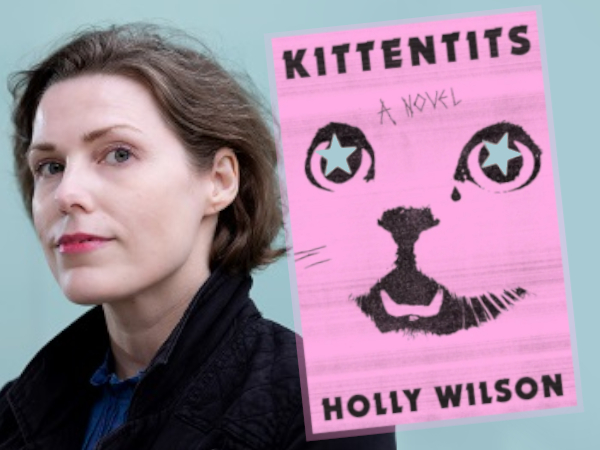
Photograph courtesy of the author
JG Stephen King once wrote that there are easy reads, but there are no easy “writes.” When people respond with pearl-clutching to your book on Goodreads, you respond by liking their bad reviews. You don’t see too many (any) writers doing this. Was this a deliberate “fuck you” to the blanket dismissiveness that flies in the face of all the hours you put into the work?
HW Haha, did I do that? Maybe I did a few times, or maybe my finger slipped, I don’t know. It’s complicated. A really scathing reader review is always more welcome than an “It was okay, nothing special” review. I’d rather provoke extreme responses in either/both directions than indifference, because that means the writing had some kind of power. And also, some bad reviews are great because they articulate all the reasons a different kind of reader would love the book. I do get that Goodreads is a space for readers, not writers. But I also think people shouldn’t post anything about someone’s work in a public forum that they wouldn’t be comfortable saying to the author directly. That’s cowardly. Like, some reviews implied all kinds of terrible things about me that are so far from the truth. They seemed to have an idea of me that was definitely not “perfectly decent/kind non-terrible woman with a kid to raise and dishes to do.” Also, sometimes there will be a negative review that’s legit clever, and I get a kick out of it. Why not give them a like?
JG It’s been said that all fiction is an act of biography. Reading Kittentits, I could see some of your interests braided into the work, from your affection for Brian de Palma’s Sisters to the famous chainsaw twirling at the end of The Texas Chainsaw Massacre. To what extent did you consciously incorporate your own interests and biography into the work, and to what extent did you consciously include allusions to other works?
HW I think it’s a mixture of conscious and unconscious incorporation. People like to share what they like with others, so there’s a lot of that going on. It’s also fun to plant little Easter eggs just because, for your own fun. But sometimes you don’t even notice stuff you’ve buried in the material until much later. The Sisters stuff was very deliberate, though.
JG There is a Black character named Nurse Le Feb who gives a poignant monologue in the book. As the reader takes in the speech, they’re struck by the language but also the lingering criticism that Le Feb is somewhat embodying the stereotypical “magical negro,” but as the speech winds down, this is addressed directly. Were you always conscious of the fine line this character was straddling, or did you always intend to subvert this, much like Percival Everett does in his works?
HW This is a tricky one, and I hope this doesn’t sound like obfuscation to say that it’s both those things. In that scene, I wanted Nurse Le Feb’s speech to be the real deal, serious and earnest and powerful. But there’s always that other part of myself in the background, rolling her eyes, totally cynical, ready with a critique. And the critique is correct. But so is Le Feb. Both these two states occupy me simultaneously, I guess, so I let them take turns.
JG On the topic of meta devices in Kittentits, at one point, the ghost character Demarcus admonishes the main character Molly for being a “flat character.” Molly is clearly anything but a flat character. Would you offer this as a critique against cynicism in literature analysis, or would you prefer a more earnest lens—that it’s possible for a character to have depth and still behave shallowly?
HW I think it’s very possible for a character to have depth and behave shallowly. It’s like the last question, where both things are true at the same time. Molly is shallow, simple-minded, predictable, and flat in the sense that she might not change, in the book or ever. But I’d like to think she’s got layers, at least a few, and even if she’s not hard to figure out, she nonetheless reads as alive and true. She yearns deeply. I think every human is this way.
JG There’s a common refrain that it takes suffering to make “good” art. Yet Sarah Silverman, the comedian and actor, who went through a period of severe depression in her high school years, once lamented that she would have given anything to not have gone through such an ordeal. To what degree do you agree that suffering is essential to creating “good” art, considering you finished the book in the wake of your husband’s passing? What would you say to other writers about the role of suffering in creating art?
HW This is hard to answer because everyone suffers. And it would be untrue to say that the knowledge that arises from suffering doesn’t sometimes make its way into art in beautiful ways. But there are levels of suffering that get in the way of a person’s ability to make art in the first place. That kind of suffering is no good.
JG Regarding grief and suffering, you’ve mentioned how you took time off from writing Kittentits after dealing with your own grief. And yet when you returned to writing, you gave the book a (slightly) more upbeat ending, as you saw “hope” as this “very essential thing.” To what degree has this epiphany-colored other aspects of your work?
HW By the time I came back to the book after my husband’s death, I’d been working on it for something like nine years total. And so much had happened in my life during that time—having my son, losing my husband—that when I returned to Molly after an extended break, I felt a weird kind of loyalty to her, I guess. She was with me before, during, and after, like an old friend. I identified with her. If I couldn’t save her, how could I save myself? But how this has colored my work otherwise, I’m not sure. I might be willing to entertain earnestness a bit more than before.
JG I was really struck by the (repeated) line, “we live in a world of infinite ecstatic possibility.” Can you tell me a bit about how this line came to be? Was this connected to how you came to see “hope” as an essential thing?
HW If I remember correctly, I came across the phrase “infinite ecstatic possibility” in some old Spiritualist pamphlet I found in my research. It stuck with me, I liked it. I’m not even sure I completely understand how it was being used in the Spiritualist sense, but what it provokes in my mind is wonderful. I think it might even be true. Who knows? We tend to see ourselves as trapped in fixed existences, but that’s not actually the case. Even if our material conditions are fixed, we have interior selves who have complete freedom. I don’t know. I like looking for freedom where we think there’s none.
JG You’ve talked about how you needed to get your energy up for the prose in Kittentits; do you find it necessary or even helpful to get in other frames of mood, say anger or despondency, to achieve a similar effect in your prose?
HW Maybe other people can write in those sorts of moods, but I can’t even imagine it. Any kind of emotional dysregulation completely zaps my focus. I have to have energy, focus, and some minimum level of basic contentment to be productive. I think there’s this idea of the tortured artist whose art is fueled by the tumult of their life, but things like health insurance, enough sleep, and time are the kinds of things I most need to be in the frame of mind to produce pages.
JG You once told me that “no one is waiting for me to finish this book.” How did you stay motivated to finish the book, in light of the relative vacuum you were working in? What would you say to other writers who work in similar isolation? When do you think a work is ready for constructive feedback, and when do you think, if ever, a writer should consider throwing in the towel on a work?
HW Well, I don’t think I did the greatest job here—it took me a terribly long time to finish. I’d get busy with work-work and stop working on it for months at a time. Almost no work happened for about a three-year period after I had my son and lost my husband. But I would always eventually go back to it, so maybe I did have some intrinsic motivation. It wasn’t easy, though. I tried to take advantage of every long stretch where I could write daily and build momentum/accumulate pages. As for constructive feedback, I think things are ready for feedback after maybe a second draft? At that point, someone else’s insight might be useful. As for throwing in the towel, I’m tempted to say never, but the right answer is probably when you just don’t care about it anymore. At that point, you can’t save it, and it won’t be any good.
JG When you consider the drafting process of writing a book, how do you decide what input is valid, and what advice do you discard? What has been the best advice you’ve ever received, and what was the worst?
HW I wish I had a better answer, but I think it’s just a gut feeling. You know when someone’s on the same wavelength and when they’re not. If someone makes an observation or suggestion, sometimes it resonates, and sometimes it doesn’t. Even if you can’t immediately solve your story’s problems, you still understand it deeply because it comes from inside you. You just kind of know when someone else is seeing the same thing you are and can offer good insight. Best advice: don’t try to be a different kind of writer than the one you are. Worst advice: You really should use quotation marks.
JG The author Jo Nesbo has said that he tells himself every book he writes is going to be a bestseller and is destined for greatness in an effort to sustain a healthy level of self-delusion to keep making something up. What is your thought process when you’re “making something up” with the expectation that it is worthy of being paid for?
HW I’ve never heard this Nesbo quotation before, but I think it’s completely true. You have to be a little in love with the work to keep going back to it. You have to believe in it the same way you initially believe in the boyfriend who in actuality, is all wrong for you. I would also add that part of you should think your draft sucks, as otherwise you’ll bail on revision and never take the work as far as it might go. The key is getting the right balance between grandiosity and self-loathing. I tend to think my draft is amazing mostly when I’m not looking at it. When I’m thinking about it kind of abstractly. The idea of it. Then the time comes to sit down and get to work, and suddenly all the messes I’ve made come crashing in.
JG Having the support of Gillian Flynn, a well-regarded author in her own right, must have been a pleasant surprise. What has been the effect of having an author/publisher of such cachet bringing your book to life? Prior to this endorsement, did you ever consider self-publishing Kittentits?
HW Working with Gillian and Zando was wonderful, and not something I ever expected in a million years. I’ll be grateful to Gillian and my editor, Emily Bell, for the rest of my life. Having two amazing forces supporting the book temporarily cured my imposter syndrome! And no, I never considered self-publishing. Self-publishing is great, but there’s no way I could have done all the work needed to get the book in readers’ hands.
JG There seems to be no “one-size-fits-all” approach when it comes to writing (not to mention getting published). What value do you think prospective writers can find in advice from other published authors?
HW I think hearing about other writers’ failures is super helpful. Not even for the practical advice, but just to know writers fail constantly. There’s no right way to write a book, there’s only the way you write a book. That being said, some advice is great for reinforcing what you probably already know or need to hear.
JG Did you always plan to take an almost Faulkner/McCarthy-esque approach to punctuation, or was this something you came upon in revisions?
HW The no quotation mark thing with dialogue seemed the only way to go. I wanted Molly to be as unreliable a narrator as possible, so most of what you get is her retelling things that happened and what people said. When you use quotation marks, that moves the dialogue more firmly into a proper objective scene the reader is watching unfold. I never want the reader to forget that everything is being filtered through Molly, so going without quotation marks keeps her front and center as the filter. The occasional missing comma or comma splice is more a matter of voice, and was there from the beginning. With the dialogue, I initially played around with using italics instead of quotation marks, but that’s just annoying to look at, so somewhere in the first draft I decided to get rid of all dialogue indicators completely. Some people love it, some people hate it, and that’s fine. Sacrificing clarity/creating ambiguity every now and then was worth it to keep Molly and her voice a continuously running machine.
JG When you talk about the faith you have that you will figure things out narratively, say, for the black box as a plot device, it brings to mind what Werner Herzog said, “When I saw the dancing chicken, I knew I would create a grand metaphor—for what, I don't know.” Can you also relate to reverse-engineering poignancy?
HW Ooh, this is an interesting question! I don’t think I reverse-engineer poignancy, but I’d have to think about it awhile. Poignancy is hard, and I wish it just happened on its own. I’ve never written what should be a poignant moment and thought, “wow, Holly, you really nailed the poignancy there.” Those tend to be my weakest moments, I think, because to me they feel forced (because they literally are). But now that you’ve introduced me to the idea of reverse-engineering them, I might try it!
JG You’ve mentioned how readers shouldn’t turn to novels for “moral instruction,” and criticisms of a work may betray a naiveté on their part that disregards human nature and the world we live in. Do you think readers often struggle to put aside their own prejudices, or perhaps more likely, a sense of moral superiority, to enjoy a work of literature that they may have no problems putting aside for film?
HW People have different ideas about what art is and what it’s for. That’s fine, people should disagree about these things. But I do really dislike it when people refuse to read a work on its own terms. I think that’s rule #1 when considering art/writing/music. And yes, this maybe does happen more often with fiction than film, as reading fiction is inherently participatory. I need my reader’s mind to render my words into visual images and felt emotion that I may or may not articulate directly. Film generally does more work for the viewer, in turn (usually) making it more accessible. It’s able to convey its terms quickly and visually without much confusion or the need for as much interpretation. If you’re doing anything somewhat stylized or weird in fiction, it’s always going to throw some readers off. With film, those same readers have their hands held a bit more, they struggle less to decipher tone because it’s delivered to them directly, already processed. That doesn’t make film the lesser medium, it just has different challenges than those of fiction.
JG Are you already in the midst of your next book, and can you tell us anything about it?
HW Yes! I’m working on the first draft of a novel about a woman who lives on a wind farm in Kansas and hears voices, specifically the voice of 19th-century radical Carry Nation. It’s leaning more surrealist than Kittentits so far, but I’m very much still figuring it out.