Curiosity ~ Lucidity ~ Humanity

Mona hired 16-year-old Fazli, when Ali, the cook, said he was too old to care for our house alone. The house in Peshawar was where we lived while we worked in Pakistan. Within a month, Ali was dead, and it was just easier to let Fazli take over his duties.
A village boy, Fazli saw us as elderly aunties that were interesting to hang around after work. He marveled at our jigsaw puzzles, jamming pieces into the wrong holes when he had a chance. He laughed hysterically when Mona bought a gadget to mend her clothes, and the seams fell apart.
Most evenings I caught up on project reports that with constant blackouts, couldn’t be left till the last minute. Fazli sat cross-legged at my feet “keeping me company.” “Shall I get you a cup of tea, madam?” “I don’t drink tea in the evening, Fazli.” “Well, it’s cold and I thought it’d be nice.” Silence, and then “I need your advice about my sister’s poor grades in English,” a subject he knew would interest me. “Later, Fazli.” It was my mistake to once have let him type a short autobiography on my computer and he had high hopes of doing it again. His life looked so much more impressive when it appeared in print.
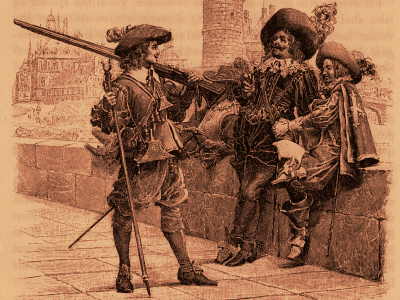
If he was lucky, the electricity failed, and he could light the candle he had ready. I still see his dark, earnest face with the long curling eyelashes accentuated by the candlelight. “Madam,” he would start, “I can tell you a good story while you’re waiting,” and he would recount episodes from books that had captured his imagination in English class. His favorite—The Three Musketeers--he knew in detail, especially the parts describing duels over beautiful women. He painted a loving picture of the heroine, stressing her modesty and good character, but pausing frequently to ask about her behavior. He was disappointed` to read that she travelled alone with men and believed she permanently ruined her reputation doing so. That led to more abstract questions such as whether people could resist temptation if their societies didn’t control contact between men and women. I suggested that there was no mention of wrongdoing during his heroine’s travels, but he was convinced the very act of their being alone implied impropriety. The Musketeers appealed to Fazli’s softer, romantic side in the rare moments he dropped his macho poses.
When the candlelight sessions exhausted his trove of stories, he moved on to poetry he had written. The poems were always about unrequited love with handsome heroes and enchanting young women and were not bad considering they were in English. When he exhausted the poetry, he told me of his aspiration to become a movie star patterned after actors in the Indian Bollywood films he watched in a nearby theater. Thinking he impressed me with his grand plans, he tried them out on Mona. She told him sharply that he needed to finish high school before getting such crazy ideas and immediately enrolled him in classes to retake the secondary exams he failed. Her comments didn’t discourage him from putting on his best shirwal khamis and dark sunglasses and lounging with the gate guards with a sultry, celebrity look.
Editor's Note: The following chapters were added after the live "What's Left Said..." event.
Workdays for us started at 6 am, that is, if Fazli remembered to set his alarm. We knew he was on schedule when there were shuffling signs from the kitchen and then the slap, slap of flip-flops on the stairs as he carried breakfast items up to the landing. We liked the vantage-point of the big picture window there to watch the neighborhood come alive. First would come the bread man cycling by with stacks of pita bread on a tray, then horses and carriages stuffed with the youngest children on their way to school, and then through it all the persistent kingfisher diving from a telephone line into the murky irrigation ditch after his own breakfast. Each day the same miracle unfolded--pristine children in starched uniforms and tightly braided pigtails started the morning fresh and rewound in the afternoons on the way home with crumpled uniforms and undone hair.
Mona’s had exacting standards for how the table should be set and what our breakfast should be. Fazli laughed the first time she told him about knives, forks and spoons and what each was used for—in his short lifetime, hands had sufficed for anything he stuffed in his hungry mouth. He worked valiantly to put the required utensils in their proper places but invariably something was lacking, and our conversation was punctuated with crashing leaps down and then up the stairs with the missing items.
One day he appeared beaming at the table with each utensil in its right place, along with butter, jam, bread and tea all arranged as Mona liked them. “To what do we owe this perfection,” Mona asked stiffly. Fazli stretched out an arm where from wrist to shoulder in permanent marker were the list of essential items and drawings of their proper placement.
Before Ali died, Fazli jotted down a cache of his standard recipes. Unfortunately, he stopped at the six he liked the most, ones he made quite tolerably if you ignored the oil every dish swam in. One day, knowing Mona’s love of order, he presented her with a schedule coordinating by level of difficulty his responsibilities for meals and cleaning. If it was Saturday, it was stew and a clean reception area. Sunday lasagna and the kitchen, Monday spaghetti and my bedroom. Tuesday eggplant casserole and the open area on the second floor, Wednesday meatloaf and Mona’s bedroom and on Thursday our favorite—Shepherd’s Pie and the laundry. Fridays were Fazli’s day off, and in theory we made do with leftovers, of which there were few, given Fazli’s hearty appetite.
Afternoons, after a main meal and naps, Mona and I walked along the irrigation canals, usually ending up in a small shopping center. There we could rent mostly Grade D videos sanitized of anything the least bit suggestive between the sexes. The best of the films were “I Love Lucy” and “Lassie” but even they were punctuated by blanks whenever Lucy kissed her husband. Fazli liked to linger in the doorway as we watched them, enjoying the, to him, provocatively dressed women in knee-length, bosom-exposed dresses. Mindful of the dangers, Mona forbade Fazli from watching any at length and had several confrontations with him when she found the sofa cushions in front of the TV rearranged upon our return from work. It drove Mona crazy with her well-formed notions of how servants should behave yet torn by a motherly sense of responsibility for this feckless young man.
One evening colleagues invited Mona and me for dinner. We sent Fazli off with forty rupees to find a taxi. But when the hours dragged by and he didn’t return, we began to worry. Finally at two in the morning he staggered in with clothes disheveled and bruises on his arms and face. He explained that when the police noticed the new clothing Mona had bought him, they saw an opportunity. He had just started making arrangements with the driver when they surrounded him and charged him with stealing the taxi. Poor Fazli of course didn’t even know how to drive. They took his money and locked him up at the police station. Then concerned that his employers might file a case against them, they said they would only release him if he gave them the names and addresses of his employers and his family. When he relented, they let him go thinking he would be too afraid to report them knowing they could retaliate against his family.
Mona of course was indignant and the next day we marched down to the police station to lodge a “First Incident Report” with the Commissioner. He told us “our boy had lied to us about the incident” and definitely was stealing a taxi. He then interrogated us about the details to show how little we knew about the incident. But Mona was prepared and gave him the exact time, place and even description of the officers. That stopped his questioning, and we left, with the cowed commissioner saying he would look into the matter.
The next day the harassment began with police officers coming almost daily when we were at work and asking for Fazli. Fortunately, Fazli’s brother, the gate guard, deflected them by saying Fazli wasn’t there. We understood by then that the police planted drugs on their victims so that the threat of a long-term imprisonment would make them withdraw their complaint. Meanwhile Fazli grew a beard and wore threadbare outfits when he shopped at the market to avoid being recognized. The harassment only stopped when I asked American officials at the consulate to intervene with the commissioner. In the end the maneuvers worked and no more was heard of the charges from either side. It’s tough being a young man in Peshawar!
Bio-Fragment: Who is Andrea?
A juggler of a thousand contradictions
The Mom wanting to give them her best yet leave them space to find themselves
The Diplomat’s wife whose opinions counted for nothing but where opportunities were endless
The anthropologist breaching obstacles to learn what other cultures think
The feminist finding comfort in Arab women’s company
The introvert wanting to be surrounded by interesting people
The writer wanting to escape into the oblivion of writing.