Curiosity ~ Lucidity ~ Humanity

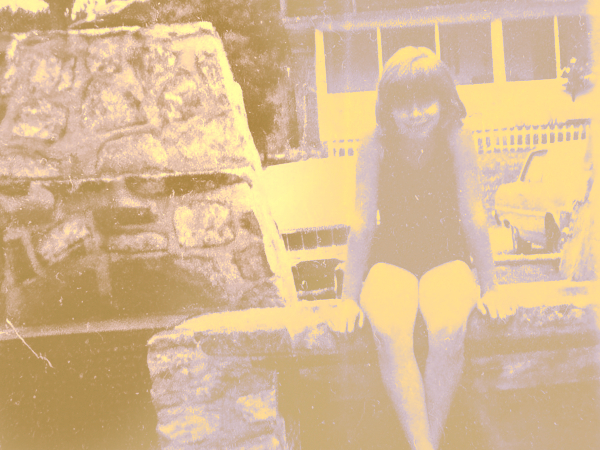
After the three-hour drive from our third-floor walkup in Brooklyn, we turn onto a short, unpaved track and I get my first glimpse of the shimmering lake. I study the six tidy, white cottages on a grassy rise facing the water. My heart beats a little faster.
My dad pulls up to our home—what I’ll think of as our home—for the next two weeks.
I’m about 8 years old and, at home in the city, I pine for water. My father, who sunburns easily, resists taking us to the beach, but finally gives in once or twice a year to take us to Oyster Bay, where he spends the day moping under the umbrella.
Occasionally, my mother, who works nights at a bank in Manhattan and usually sleeps during the hot summer days, agrees to take me to Cypress Pool (“so expensive,” she always mutters as we line up on the hot sidewalk outside). The pool, which is now buried under concrete, was constructed in 1929, and is just a short, elevated train ride away (as kids we loved craning our necks as the El passed overhead and being able to look down from the train window at the throngs of swimmers splashing below).
“Soon,” I think, “I’ll spend the day jumping into the icy water, and feel my feet grazing the peeling paint at the pool’s bottom.” The pool deck was hard, concrete, and hot enough to burn feet. The mens’ and womens’ lockers were simple wood partitioned cubicles, open to the sky— which I thought was amazing. Could folks in the planes heading toward JFK look down on our naked bodies?
At the pool’s shallow end stood several majestic, white, stone lions, their open mouths spouting deliciously biting torrents of artesian well water. We didn’t have lounge chairs, so we spread out our thin beach towels. Sunbathing isn’t the day’s main objective—being in the water is. One of the few families on our block to own a car, we often take road trips: Niagara Falls, the Catskills and Hudson Valley. I stare out the backseat window, gazing hungrily at the Holiday Inn pools (swanky!) zipping past us. Each trip, I beg my parents to please check in there. I cringe at the thought of the small motels where we normally stop; often mean, little places with cracked asphalt forecourts, a view of a weedy field and propane tanks out back and two tired-looking webbed aluminum chairs in front of each room.
But going to the lake is different. I imagine that I live there, that this tiny cottage is our home (a “one family!”), not the stifling five rooms we’ve left back in Brooklyn. My dad calls them “railroad rooms.” The “strange only child” in a sea of friends with multitudes of siblings, I conflate my yearning for the boisterous warmth I saw in the large Irish and Italian families around us with my dream of a one-family house with an “upstairs and a downstairs.” City kids, we held roaring games of stoopball, softball in the street (calling, “Car!” as we’d all step aside and allow the vehicle to pass), ringolevio and Johnny-on-the-pony. We ran up and down stairs in the hallways of our apartment buildings, only to be chastised by stern Italian landladies muttering about insolent little girls. Still, I often felt out of place. In our house it was always just the three of us. Feeling deprived of the camaraderie I was sure existed beyond our apartment, I confused living somewhere else—preferably not in our goldfish bowl apartment existence (one neighbor even expressed envy after seeing my mother’s girdles hanging on the clothesline that stretched out our back window to a pole in the yard) with escape from my one-ness.
Years before I was born, my mother clipped an ad for the place from a newspaper. She hoped that she and my dad could relax away—at least for two weeks—from the brutal city summer. My dad could sit under the trees, out of the sun, in an Adirondack chair smoking his Camels while mom read, smoked and floated in the lake. Later, when I am older, she tells me that I was conceived there, after a long period in which they thought they would never have children. Throughout my childhood, their advanced ages—my mom was well into her 30s when she became pregnant—not so unusual now, but certainly so in the late 1950s—imprinted on us as unhip. Often embarrassed by their lack of cool and ignorance of pop culture and fashion, I struggled to keep up.
Until I was five, my dad’s father lived with us. Embedded into the very fiber of his tightknit German/Irish community, he’d gone to the parish church and my school, as had my dad. When faced with my parents’ proposal of a possible move to Long Island, Grandpa refused to leave, playing on their sympathies for his connection to the church and his beloved Holy Name Society. Later, after he was gone, I begged them again to consider buying a house. Rolling her eyes, my mother said matter-of-factly, “No one will give us a mortgage at our age.” It was a time when lower middle-class people in their late forties didn’t take out mortgages. I had no awareness of our family’s financial situation believing that, in our social circles and church families, we were all on even ground.
A product of a Depression-era, Protestant stoicism, my mother often seemed cold and aloof when compared to my friends’ mothers who embraced—literally and figuratively—and fed me. The odd latchkey kid, I often felt pitied in my aloneness as I sat at their kitchen tables eating Cap’n Crunch and watching cartoons before school. At the lake there are no kerchiefed ladies with coral lipstick leaning out windows, elbows on bed pillows, cajoling me to “run down to the corner and get me a pack of Pall Malls.” At the lake I won’t have to sit at our neighbor’s kitchen table where I’m disturbed, but not quite sure why, when she commands me to use my fingernails to peel off her thick, red nail polish as she and my mom gossip and drink coffee. At the lake I won’t have to go into the dark, cobwebby basement to retrieve my bike stored there. At the lake I won’t have to beg to be taken swimming.
At the cottage, because my parents’ room is separated from mine by a wall and a door, not just an archway like at home, I won’t hear their tense, whispered arguments—and sometimes barely restrained louder voices—or other confusing nighttime sounds. There are no landlords to mutter in Italian about misbehaving 8-year-old girls running up and down in the hallway and on the stairs. At the lake, I’m not the odd, only child of older parents in a neighborhood of big Catholic, Irish and Italian families.
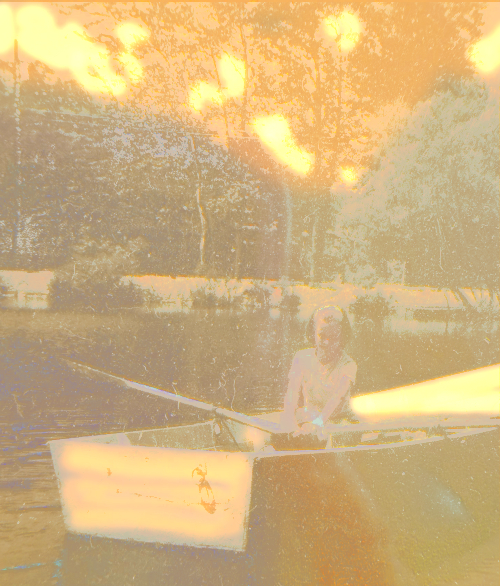
The annual lake trip ignited my search for something—the missing piece—a raft of cousins or siblings, or simply a home of our own; the “upstairs” and “downstairs,” a tangible sign of belonging and stability that I associated with ‘normal’ families. At the lake, where I’m just a girl on vacation with her family, the weight of my old life would lift, solving unspoken issues I could not name. Rowing a boat with a group of kids who didn’t know my insecurities, I felt unexposed and accepted at the same time. Evenings stretched out lazily around bonfires, the smell of smoke and roasted marshmallows threading through oak trees that surrounded the resort. Trips to the country dairy for ice cream, playing at the Drive-In playground before the Jerry Lewis/Dean Martin feature began, and nights that stretched into whispered ghost stories with new friends— woven together into summer memories I could savor. For two weeks, I belonged to something bigger than my own small apartment—something warm, noisy and forgiving. It would take decades and reinventions of family to understand what I’d been searching for. As an adult, I moved frequently, both in the U.S. and overseas. I’ve often adopted people delivered to me as ready-made families, cultivating a large network of friendships, both geographically close and thousands of miles apart. Through the simple passage of time, I realize that the idealized families and suburban homes I'd longed for as a child were just that—idealizations. Ultimately, my journey wasn't about finding that perfect external structure, but about redefining “family” and “home.” The true journey was not to the lake, but to the creation of my own sense of home, brick by imperfect brick, with the people who saw me for who I was.
Ellen Acconcia Bio-Fragment: A recovering marketing and communications professional, originally from New York City, I currently write from my home in coastal North Carolina. A perennial writing class taker, I enjoy putting my memories into words on a page. I’m a member of the North Carolina Writers Network; with a certification in creative nonfiction from New York University.